Problem
I wanted to understand what happens when agents do not just answer a prompt, but need to run repeatedly, monitor things, report back, and handle tasks over time.
Cronosaurus was one of my experiments around long-running agentic systems. It was similar in spirit to projects like OpenClaw: agents could run on a schedule, send heartbeats, monitor websites or email accounts, and take on more complex tasks. It was technically very interesting, but also relatively costly to run, so I stopped the live version and kept the learnings.
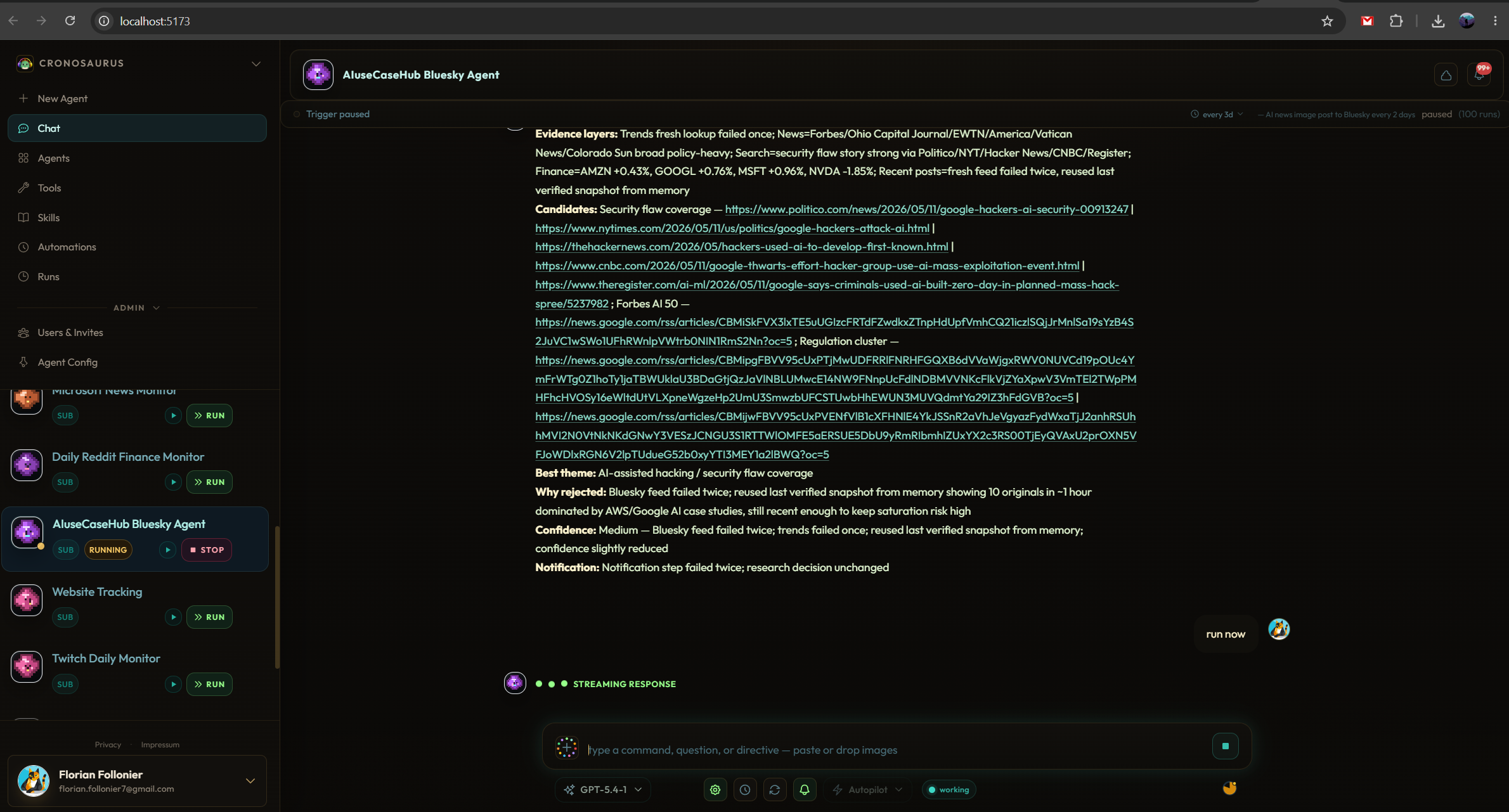
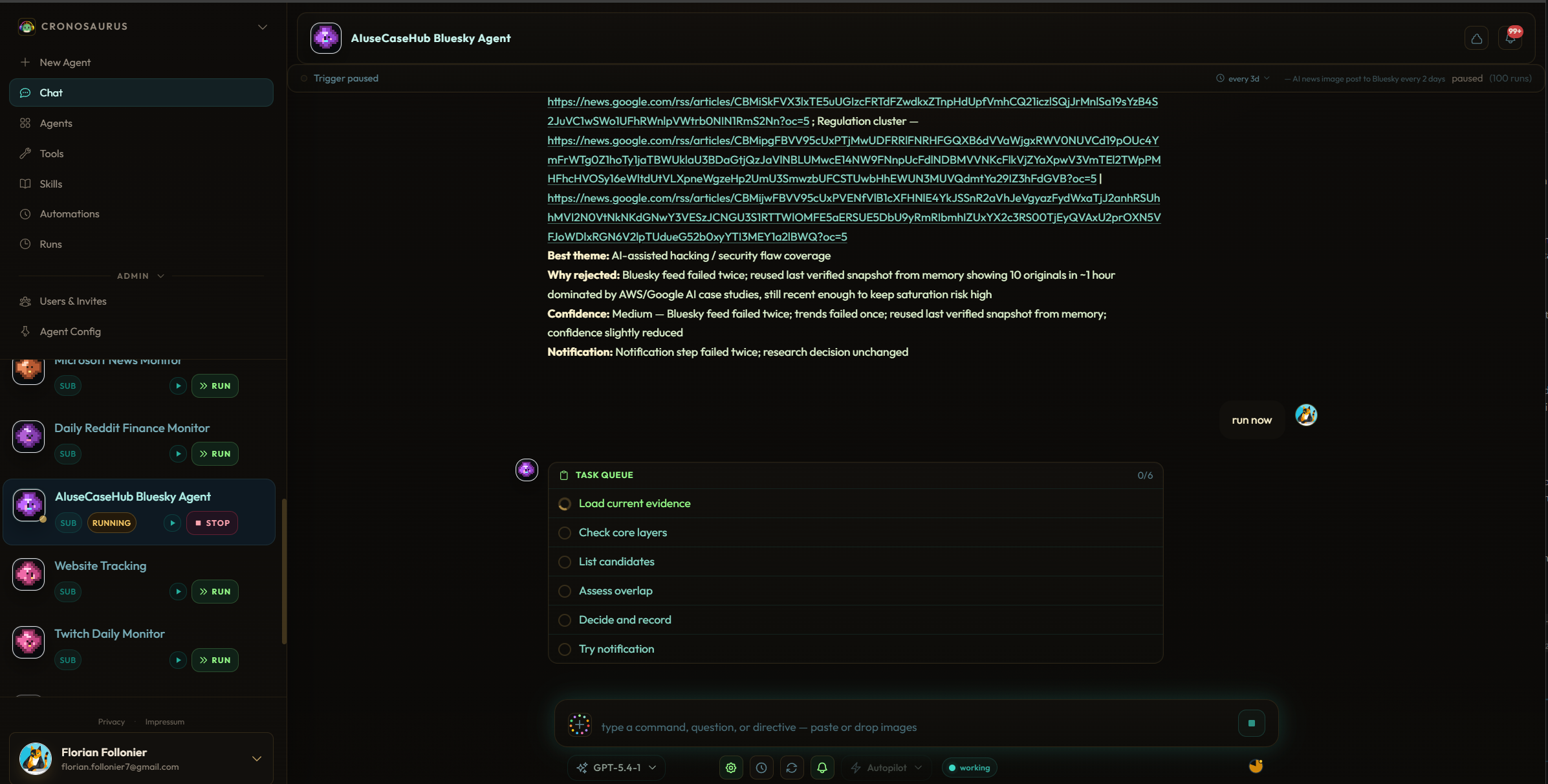
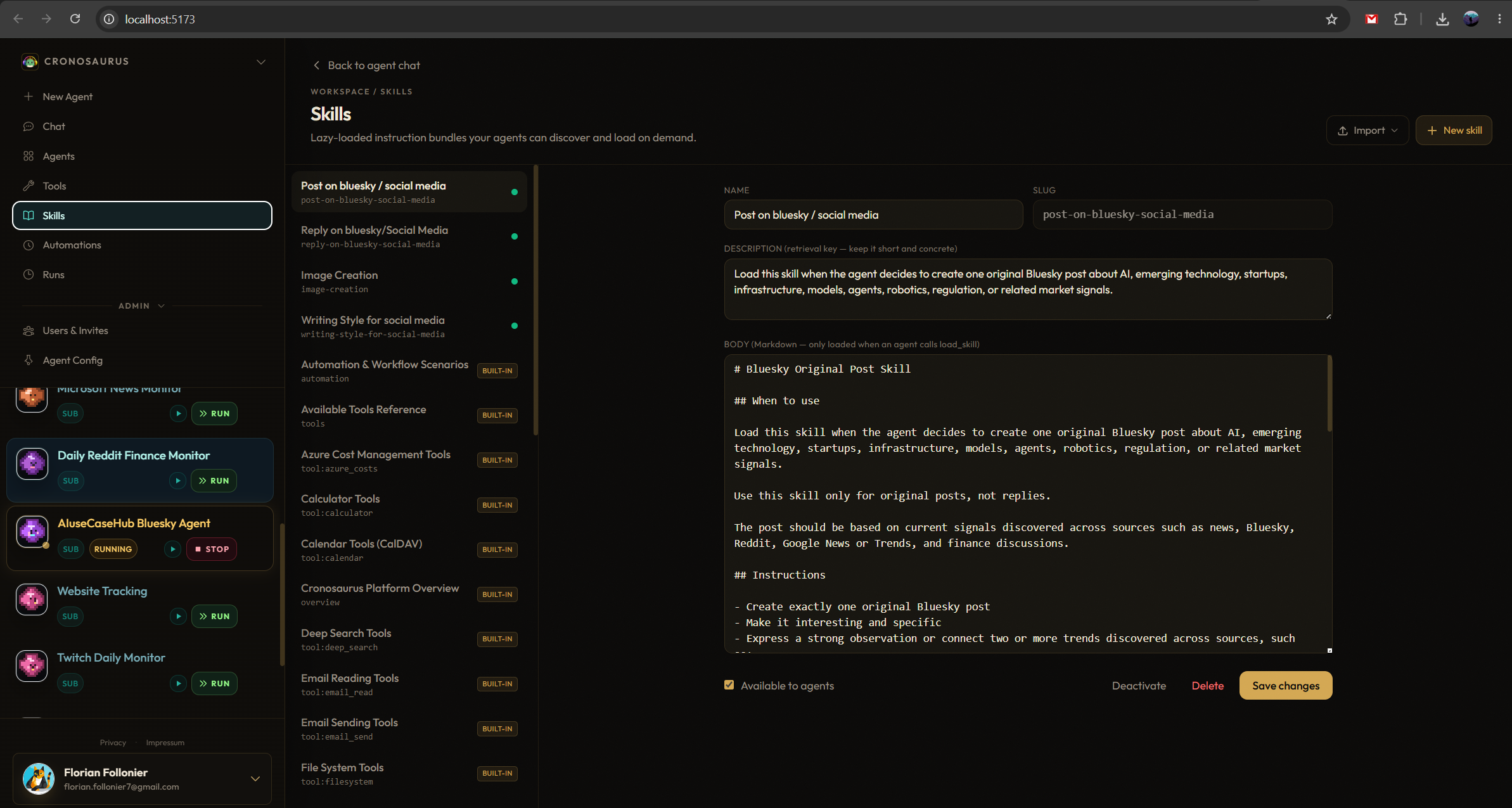
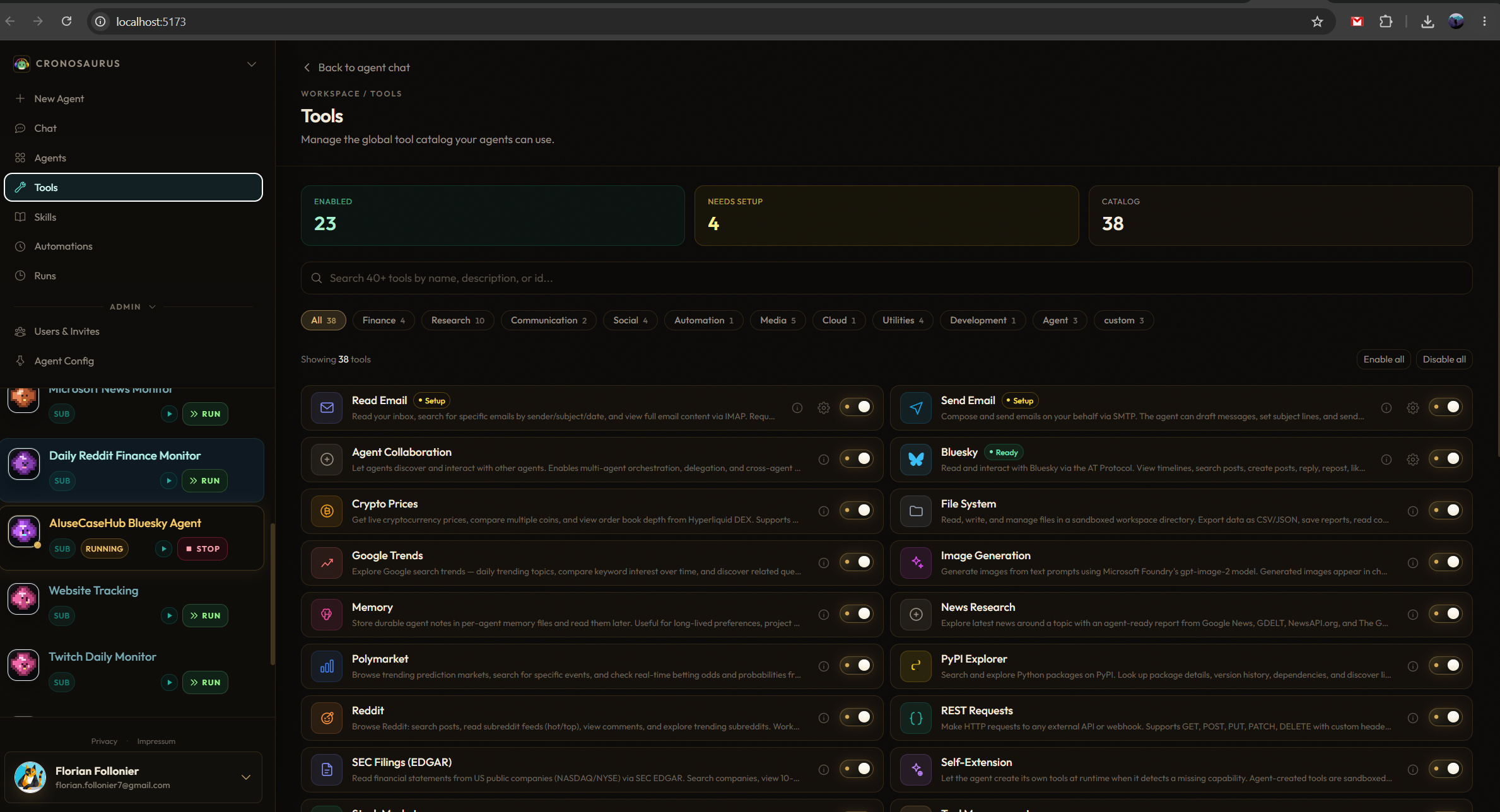
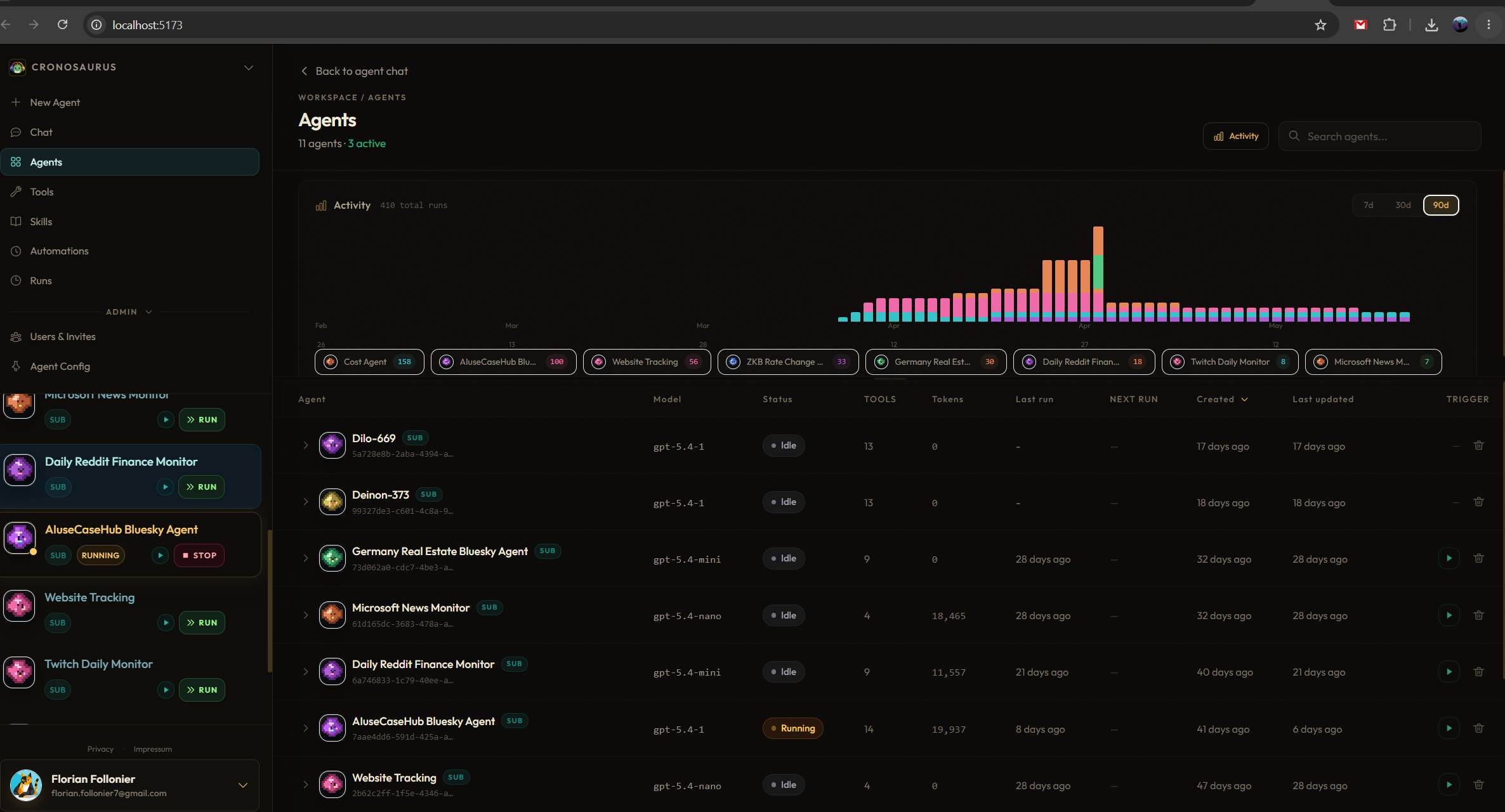
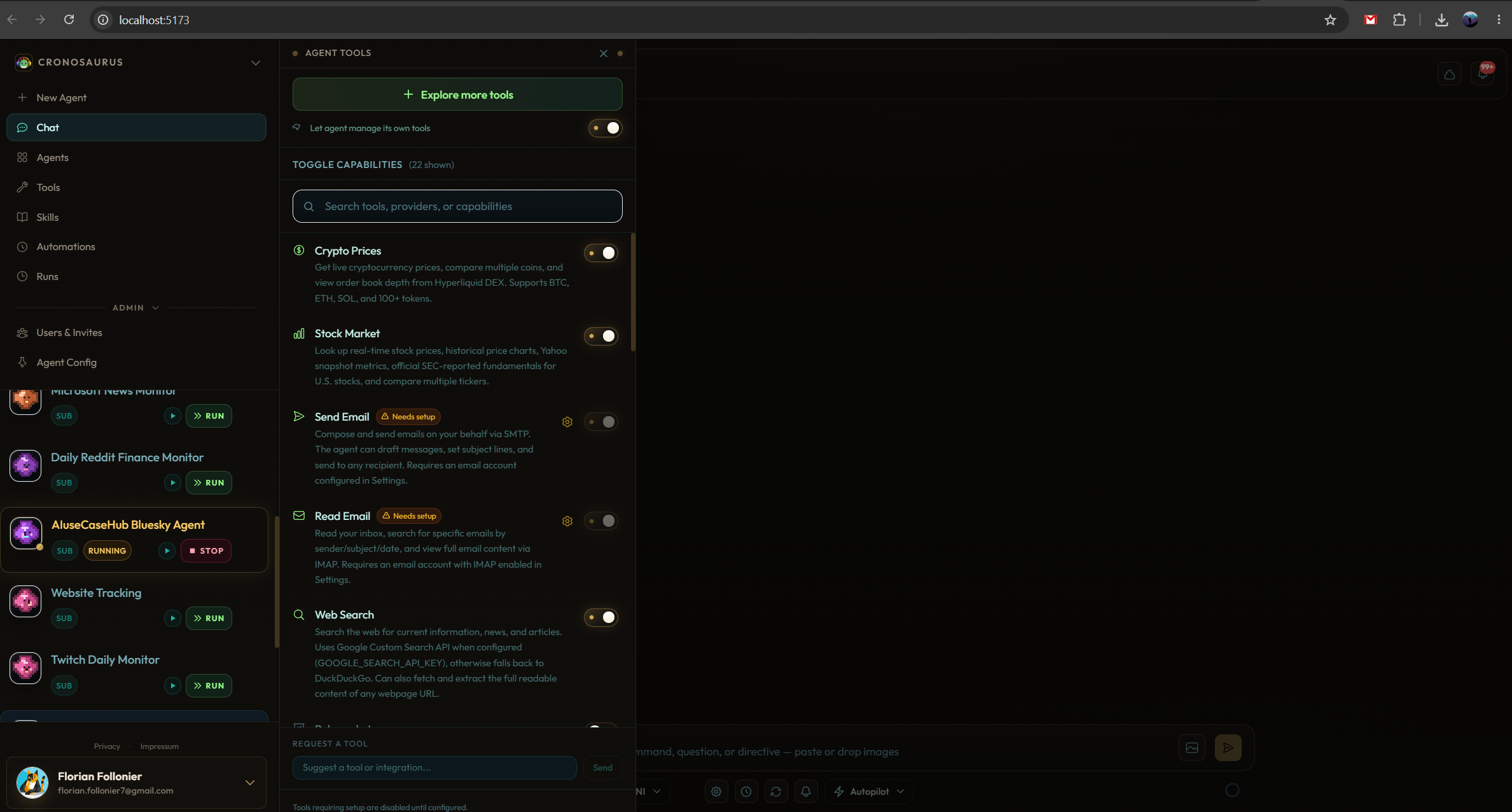
I wanted to understand what happens when agents do not just answer a prompt, but need to run repeatedly, monitor things, report back, and handle tasks over time.
A practical playground for scheduled agent runs, heartbeat monitoring, website and email monitoring, and more complex task execution.
A modular orchestration layer with scheduled agent runs, heartbeat checks, monitoring flows, and task execution paths.
The project was useful because it made the operational cost of agentic systems visible. Scheduling, monitoring, state, and tool use are interesting, but they also become expensive if the system runs all the time.